
Jefferson County Arrest Records and Court Charges
An arrest record is the record of the arrest itself. It notes who made the arrest, when, and the booking that follows when a person is taken to jail. In Jefferson County, the Sheriff's Office is the chief law enforcement agency and makes most arrests, alongside the Mississippi Highway Patrol, Natchez Trace Park Rangers, and the county's two constables, who hold countywide arrest authority. An arrest, though, is only the start. Soon after, a prosecutor decides the formal charges and files them with the court, where they become the charge record. The arrest puts a person in custody; the charge is the legal accusation the state pursues.
The two records live in different places. The arrest and booking detail sits on the sheriff and jail side, so the jail roster and booking data belong with the custody record covered on the Jefferson County inmate records page. The court charge record sits with the court clerk, who tracks each charge through the case. Justice Court handles affidavits and first appearances for felonies, while the County Prosecuting Attorney and the 22nd District Attorney decide and file the court charges after arrest. The full case file and final outcome run through the criminal court records page.
How to Find Jefferson County Arrest Records and Charges
Jefferson County publishes no single public search site for arrests or charges. The charge record shows up where the case is filed, so the search runs through the court clerks and the statewide systems. Mississippi Electronic Courts is the case-management and e-filing system for Circuit, Chancery, and County Courts, and registered viewers reach filed documents through PAMEC. For the booking side, the jail roster and custody detail are handled through the sheriff and statewide custody tools rather than a county arrest database.
- Register at PAMEC to view electronic court filings, then sign in with your viewer account.
- Search by defendant name or case number, then narrow by court and date to find the matter.
- Open the case and read the charge list, including each count and its statute.
- Check each charge's code, level, and current status, such as pending, amended, or dismissed.
Charges also surface in statewide tools. The Mississippi Department of Corrections inmate search lists people in state or regional custody with their identifiers, and Mississippi VINE registers anyone to receive custody and case alerts. For older or non-digitized files, call or visit the Circuit Clerk or Justice Court counter in Fayette.
Who Makes Arrests and Files Charges in Jefferson County
Arrests in Jefferson County come from several agencies. The Sheriff's Office, led by James E. Bailey Sr. at 601-786-3403, makes most local arrests and runs the jail. The Mississippi Highway Patrol, Natchez Trace Park Rangers, and the Fayette Police Department also bring people in. The county's two constables, elected by district, carry countywide authority to serve civil process and make arrests. A look at the local process officers shows how an arrest reaches the court system. The Jefferson County constables page describes that countywide arrest and process role.
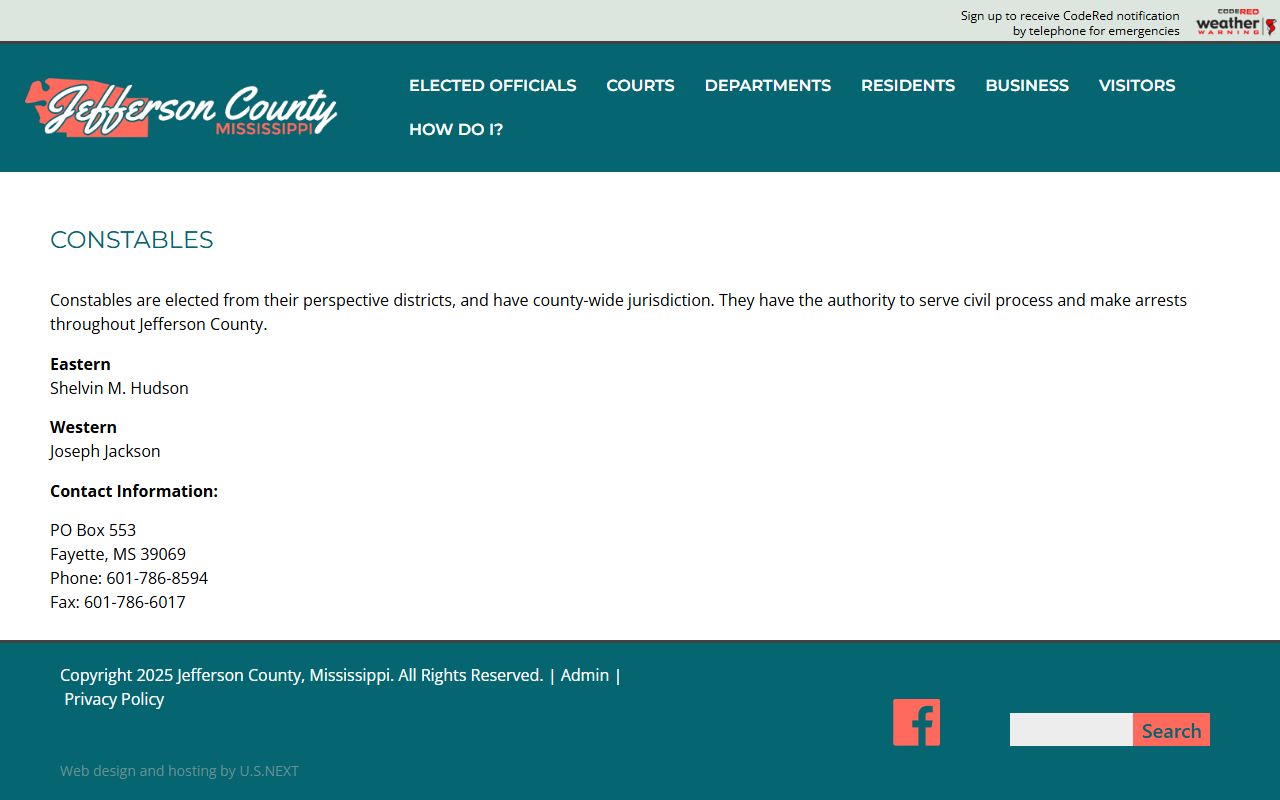
After an arrest, Justice Court takes the affidavit and holds the first appearance, often at a jail session held three times a week so it happens within three days of arrest. Prosecutors then decide the formal charges. The County Prosecuting Attorney, Ikeecia Colenberg, represents the state in felony matters before Justice Court and in appeals to Circuit Court, while the 22nd District Attorney, Daniella Shorter, prosecutes felonies in Circuit Court after indictment.
Statewide systems track a person once they enter state or regional custody. A look at the corrections side rounds out the arrest-to-charge path. The Mississippi MDOC VINE service explains how custody alerts follow an offender through the system.
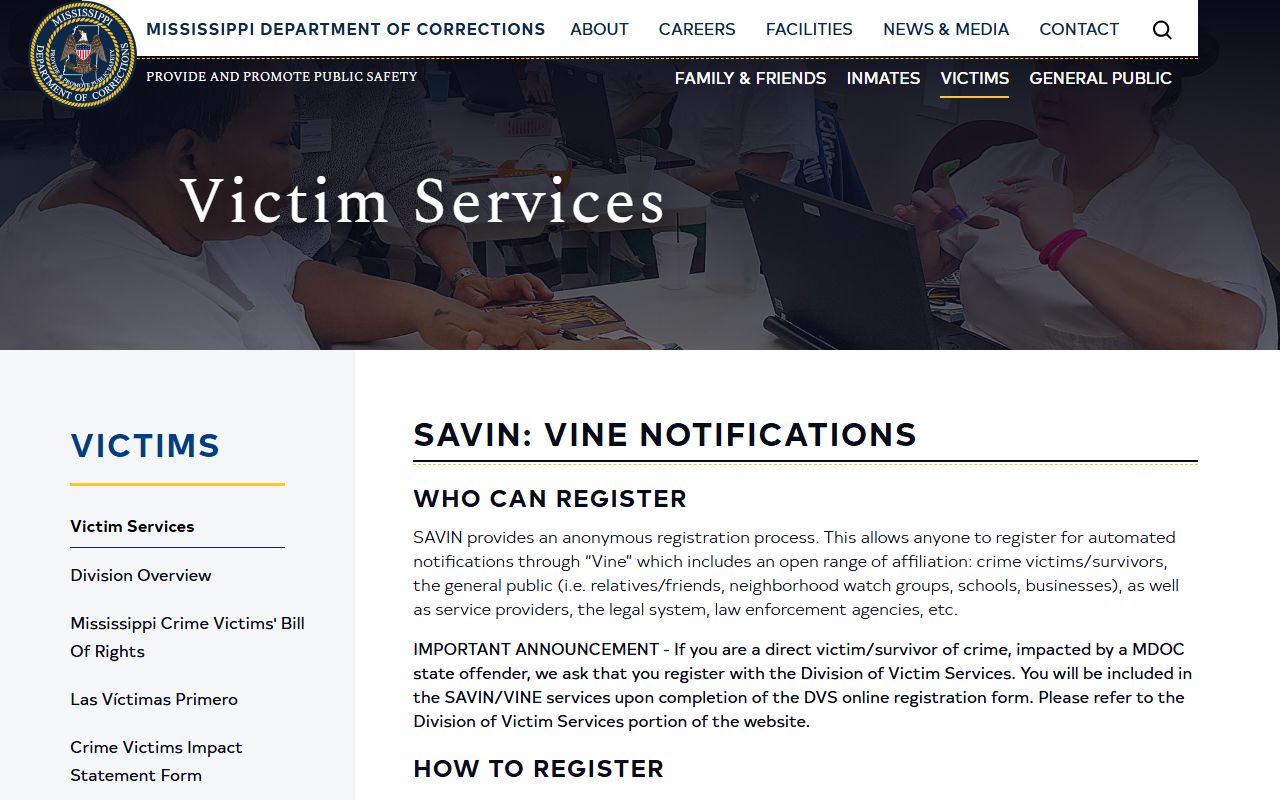
VINE notifications cover transfer, return to custody, escape, and release. They do not replace the court charge record, which the clerk keeps in the case file. Together, the sheriff's arrest data and the court's charge data form the full arrest-to-charge picture.
How Charges Get Filed After an Arrest: Complaint, Information, and Indictment
The charge record begins when the prosecutor files a charging document. An arrest and booking come first, but the formal accusation is a separate paper filed with the court. Mississippi uses three main types. A complaint or affidavit starts many lower-court and misdemeanor matters. An information is a charge the prosecutor files directly in some cases. An indictment is a formal felony charge a grand jury returns, and it is the route most serious felonies take in Jefferson County before the case moves to Circuit Court.
| Complaint / Affidavit | Information | Indictment | |
|---|---|---|---|
| Filed By | Officer / Prosecutor | Prosecutor | Grand Jury |
| Common For | Misdemeanors, first appearances | Some felonies | Serious felonies |
| Where in Jefferson County | Justice Court | Circuit Court | Circuit Court |
In Jefferson County, a felony usually starts with an affidavit in Justice Court, then moves to the grand jury for an indictment, then to Circuit Court for the rest of the case. The charging document sets the counts the state will pursue. From there, each charge can change as the case develops, which is why charge status matters as much as the first filing.
Charge Status and What It Means
Charges do not stay fixed. As a case moves, the prosecutor and court can amend, reduce, add, drop, or dismiss them. The charge record tracks these shifts, so the count filed at arrest may not be the count at the end. Reading the current status of each charge tells you where the case really stands. The terms below show up often in Mississippi criminal files.
| Status | What It Means |
|---|---|
| Pending | The charge is filed and active, with the case still moving through the court. |
| Amended / Reduced | The charge was changed, often to a lesser offense, by the prosecutor or court. |
| Dismissed | The court dropped the charge, ending it without a conviction on that count. |
| Nolle Prosequi | The prosecutor chose not to pursue the charge, withdrawing it from the case. |
One arrest can lead to several charges, and each can land in a different status. A case might show one count reduced, another dismissed, and a third pending. Because of that, the charge record should be read count by count. The full disposition and any sentence appear once the case closes, which is covered on the criminal court records page.
Charge vs. Conviction in Jefferson County Arrest Records
A charge is not a conviction. An arrest record and the charges that follow show only what the state accused, not what a court decided. A charge rests on probable cause, the lower standard used to bring a case. A conviction requires proof beyond a reasonable doubt through a plea or a verdict. Many charges end without a conviction through dismissal, acquittal, or a withdrawal by the prosecutor. Both the charge and the outcome stay in the public file, so the disposition is the part that shows the result.
| Charge | Conviction | |
|---|---|---|
| Stage | Accusation | Verdict or plea |
| Burden of Proof | Probable cause | Beyond reasonable doubt |
| Public Record | Yes | Yes |
Treating an arrest or a charge as proof of guilt is a common mistake. The record may carry charges that were later dropped or never proven. A fair reading checks each count against its current status and final disposition before drawing any conclusion about the person named.
Sealed vs. Expunged Records
Some arrest and charge records leave public view. A sealed record is closed from public access by law or court order but still exists. An expunged record is removed or restricted so it is treated, for most purposes, as if it never happened. Mississippi allows expungement of qualifying arrests, dismissals, misdemeanors, and a limited set of felonies when the statute's criteria are met. A dismissed or acquitted charge is often a candidate, but the filer must meet the legal terms.
| Sealed | Expunged | |
|---|---|---|
| Visibility | Hidden from public | Destroyed / treated as never existed |
| Law Enforcement | Limited access | Very limited |
| Eligibility | Set by court order or statute | Qualifying cases under Miss. Code Ann. 99-19-71 |
An expungement of an arrest or charge starts in the court that handled it. The Circuit Clerk lists a petition for expungement on its fee schedule and asks filers to contact the office for the local fee and routing under Miss. Code Ann. 99-19-71. If granted, the order goes to the arresting agency, the jail, the prosecutor, and the court so they restrict the record.
Note: Even after expungement, some agencies keep limited copies for law-enforcement, licensing, or court use, depending on the statute and the terms of the order.
Charge Codes and Severity Levels
Each charge ties to a statute. The charge record lists the code or section that defines the offense, which is how the court and prosecutor track exactly what was filed. Mississippi sorts offenses by severity. Felonies are the most serious and carry the longest possible terms. Misdemeanors are lower-level offenses handled often in Justice Court. Some matters are minor infractions, such as many traffic and ordinance violations, which carry fines rather than jail.
One arrest can produce several separate charges, each with its own code and level. A single incident might bring a felony count, a misdemeanor count, and a traffic count all at once. The severity level shapes which court hears the case and how the charge can change. Felonies route through the grand jury and Circuit Court, while many misdemeanors and citations finish in Justice Court, which also handles DUI and county ordinance matters.
Statewide Charge and Criminal History Lookups
Charges filed in Jefferson County can roll up into statewide systems. The Mississippi Department of Corrections runs an inmate search for people in state or regional custody, which shows the person and their identifiers. Mississippi VINE registers anyone to receive alerts about custody and case changes. The Mississippi sex offender registry is a separate public database for required registrants. None of these is the county charge file, but each can confirm custody or status when the court record is hard to reach.
Public access to the court charge record itself rests on state law. The Mississippi Public Records Act makes records held by a public body open for inspection unless a statute exempts them. The Mississippi Public Records Act sets that baseline, and the Mississippi sex offender registry offers one statewide lookup tied to certain convictions. For court filings, the electronic route runs through Mississippi Electronic Courts, with the clerk counter as the fallback for older records.
Background Check Considerations
People read arrest and charge records for many reasons, from checking a case to looking into a person before a deal. A casual lookup of a public charge file differs from a formal background check used for credit, employment, housing, or insurance. Federal law sets rules for those reports. A compliant check runs through a licensed consumer reporting agency that follows the Fair Credit Reporting Act, and it weighs charges against their final outcomes rather than treating an arrest as guilt.
Important: Public arrest and charge listings are not a certified criminal-history report, and they may not be used for credit, employment, tenant, or insurance decisions under the FCRA.
Restricted Charge Records in Jefferson County
Some arrest and charge records are not open. Juvenile matters go through Youth Court and are kept apart from adult records. Sealed and expunged charges drop out of public portals and clerk counters. Dismissed charges may be withheld once expunged, and active investigations or sealed warrants can stay closed while a case is open. A blank result does not prove a charge never existed; the record may be restricted, on paper, or held by another court.
When a charge record is hard to find, the surest step is to ask the office that should hold it. The Circuit Clerk can speak to felony charges and indictments. Justice Court can address affidavits, first appearances, and misdemeanor charges. CourtListener offers free access to some court opinions and dockets as a research aid, though it is not the official clerk record. The CourtListener archive can supplement, but the county clerks remain the source of record for local charges.
That archive can fill gaps for published rulings, but it will not show a local pending charge or a sealed file. For an authoritative answer on any Jefferson County charge, the clerk who holds the case is the right call.