
What Probate Covers in Jefferson County
Mississippi has no court named "Probate Court." Probate is handled by Chancery Court, the state's equity court. In Jefferson County, the 17th Chancery District Court hears these matters, and the Chancery Clerk keeps and records the files. Chancery covers estates of people who have died, with or without a will. It also covers guardianships for minors, conservatorships for adults who cannot manage their own affairs, minor settlements, and the confirmation of property title.
The same office reaches well beyond estates. Chancery Court handles divorce, custody, adoption, alimony, and property disputes, while the Chancery Clerk records deeds, mortgages, liens, lis pendens, and military discharges. Land deeds are filed with the Chancery Clerk, which is why estate work and real-estate records sit side by side. For a deeper look at the clerk's full duties, see the Jefferson County Chancery Clerk page.
Because Chancery handles both the court file and the land record, a single estate can touch several record types at once. A will, a property deed, and a creditor claim may all live in the same office.
The clerk's reach is broader still. As Clerk of the Board of Supervisors, the office records county minutes, and as county treasurer it prepares the claims docket and payrolls. For record seekers, the point is simple. Estates, guardianships, conservatorships, land titles, and recorded deeds all run through one chancery office in Fayette, which keeps the search in a single place.
Probate Terms Defined
Probate filings use words that rarely come up in daily life. A quick glossary makes a Jefferson County estate file easier to read. The terms below appear often in chancery petitions and orders.
- Testator
- The person who made the will being probated.
- Executor
- The person named in a will to carry out its instructions and settle the estate.
- Intestate
- Dying without a valid will, so state law decides who inherits.
- Administrator
- The person the court appoints to settle an estate when there is no executor.
- Guardianship
- Court-ordered care of a minor or an incapacitated person and, often, their property.
- Conservatorship
- Court-supervised management of an adult's property or financial affairs.
How to Search Jefferson County Probate Records
Jefferson County does not publish an online probate-file search. A probate records search runs through the Chancery Clerk in person, by mail, or by phone. Where electronic filings exist, the statewide Mississippi Electronic Courts system and its public viewer, PAMEC, may hold chancery documents, but viewing requires registration and login. State e-filing went statewide in 2025, so newer cases are more likely to be electronic than older ones.
Start with the office, not a website. The steps below follow the county's chancery access path.
- Identify the estate, the decedent or ward, and an approximate filing date.
- Contact the Jefferson County Chancery Clerk at 601-786-3021, or visit the courthouse counter at 1483 Main Street in Fayette.
- Register for Mississippi Electronic Courts through PAMEC if you need remote access to electronic chancery filings.
- Pay the per-page copy fee and request certified copies when a record is needed for legal use.
If a file does not appear online, do not assume it is gone. The record may be in paper or older storage, sealed, restricted, or simply not yet digitized. Public access also rests on the Mississippi Public Records Act, which keeps most court files open unless a statute makes them confidential.
For records that are not a standard case file, the county also offers a public records request form. It works best for administrative records rather than active probate cases, which should start with the clerk's counter. The form is linked from the county forms page and asks for the office that holds the record, the names involved, a date range, and how you want the copies delivered. Probate case copies, though, move fastest when you go straight to the Chancery Clerk.
Jefferson County Chancery Court and Chancery Clerk
Two contacts matter for probate. The Chancery Clerk holds and records the files, and the 17th Chancery District Court judges decide the cases. Serena King serves as Chancery Clerk, with deputy clerks Myrtis Collins and LaShonda Rankin. The chancery judges are Hon. E. Vincent Davis and Hon. George Ward. The clerk's office is the practical first stop for any estate, guardianship, or land record.
The official Chancery Clerk page describes the office's broad role across court records, land recording, and county finance. You can review it on the Jefferson County Chancery Clerk page before you call.
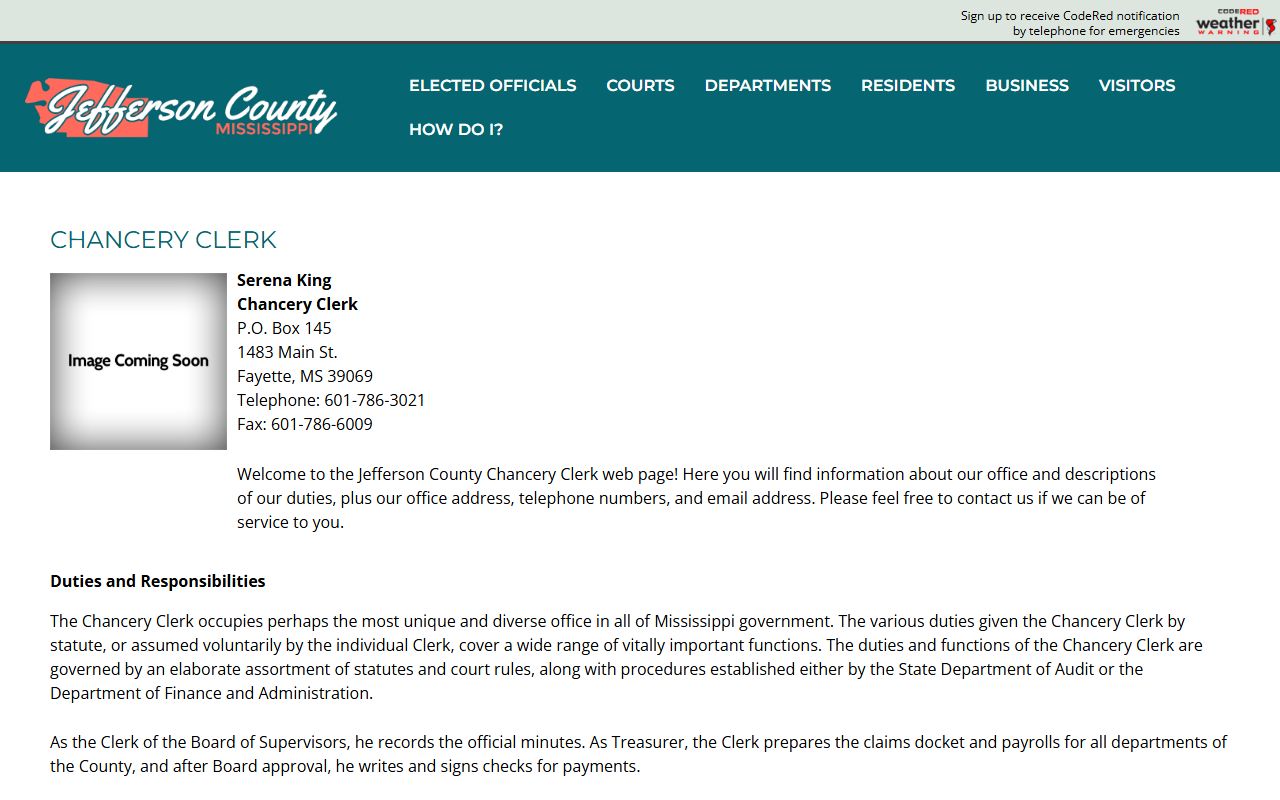
That page lists estates, guardianships, conservatorships, and land recording among the clerk's duties, which confirms it as the right office for probate. The contact cards below give the mailing and phone details for both the clerk and the district court.
Jefferson County Chancery Clerk
Serena King, Chancery Clerk
P.O. Box 145, 1483 Main St.
Fayette, MS 39069
601-786-3021
Fax 601-786-6009
17th Chancery District Court
P.O. Box 494
Fayette, MS 39069
601-442-7454
Hon. E. Vincent Davis; Hon. George Ward
Jefferson County Probate and Chancery Fees
The Chancery Clerk charges flat fees to open most chancery cases and a per-page rate for copies. Recording a deed tied to an estate carries its own fee. The amounts below come from the county's chancery fee schedule.
| Item | Amount |
|---|---|
| Filing a chancery case (estate) | $107.00 |
| Guardianship | $107.00 |
| Adoption | $107.00 |
| Copies | $0.50 per page |
| Notaries | $1.00 per page |
| Deeds, deeds of trust, leases | $11.00 and up |
Note: Criminal-cost and older-file search charges can vary, so call the Chancery Clerk to confirm a total before you mail a request or copy order.
How Probate Works in Jefferson County
Opening an estate follows a set order. The path depends on whether there is a will and whether assets need court administration. The steps below outline the county's chancery process.
- Determine whether the decedent left a will and whether assets require Chancery Court administration.
- File the will or estate petition with the Chancery Clerk, not the Circuit Clerk.
- Pay the chancery filing fee, unless the court grants relief from costs.
- The court may appoint an executor, administrator, guardian, or conservator, depending on the case.
- Give notice to heirs and creditors, report the inventory, handle creditor claims, and obtain court orders.
- For guardianships and conservatorships, expect medical or incapacity proof, a bond, and annual accountings.
- Close the estate with a final accounting and distribution, then request certified copies as needed.
Land and title disputes connected to an estate lean on the clerk's recording indexes, since deeds, mortgages, and liens are filed there. That overlap is why a single estate can pull in both a court file and a property record.
What Jefferson County Probate Records Show
A chancery probate file builds up over the life of an estate. No sample Jefferson County case is viewable without a PAMEC login, but the expected fields are consistent across estates. A typical file holds the items below.
- Estate name, decedent, case number, and filing date.
- Petitioner, attorney, and the assigned judge or chancellor.
- Will status and the fiduciary appointment, plus any bond or oath.
- Heirs, the inventory of assets, and creditor claims.
- Notices, court orders, accountings, and any sale petitions.
- The final decree closing the estate.
Marriage and divorce filings live in different offices, so an estate file will not contain them. Those records and their fees are covered on the Jefferson County marriage and divorce records page.
Restricted Jefferson County Probate Records
Some probate-related files are not open to the public. Adoption records run through Chancery Court but are commonly sealed by law and court order. Minor settlements and guardianship medical proof can hold private details that limit access. Mental-health and disability commitment files often contain medical information and are treated as restricted.
Personal identifiers are limited even in open files. State electronic-court rules direct filers to keep Social Security numbers, dates of birth, minor children's names, financial account numbers, and home addresses out of public documents except as allowed. When a record looks sealed, the clerk can explain whether a statute or a court order controls it.
Related Courts and Estate Matters
Chancery probate is a state matter, but two other systems sometimes come up when people research estates and debts. Each is a different jurisdiction, shown here only as a cross-reference, not as a Jefferson County probate channel. Neither replaces the Chancery Clerk for a county estate file.
Bankruptcy is a federal estate-and-debt process, separate from a chancery probate estate. Jefferson County falls under the U.S. Bankruptcy Court for the Southern District of Mississippi, which handles debtor estates under federal law. You can see that court on the Southern District of Mississippi Bankruptcy Court site.
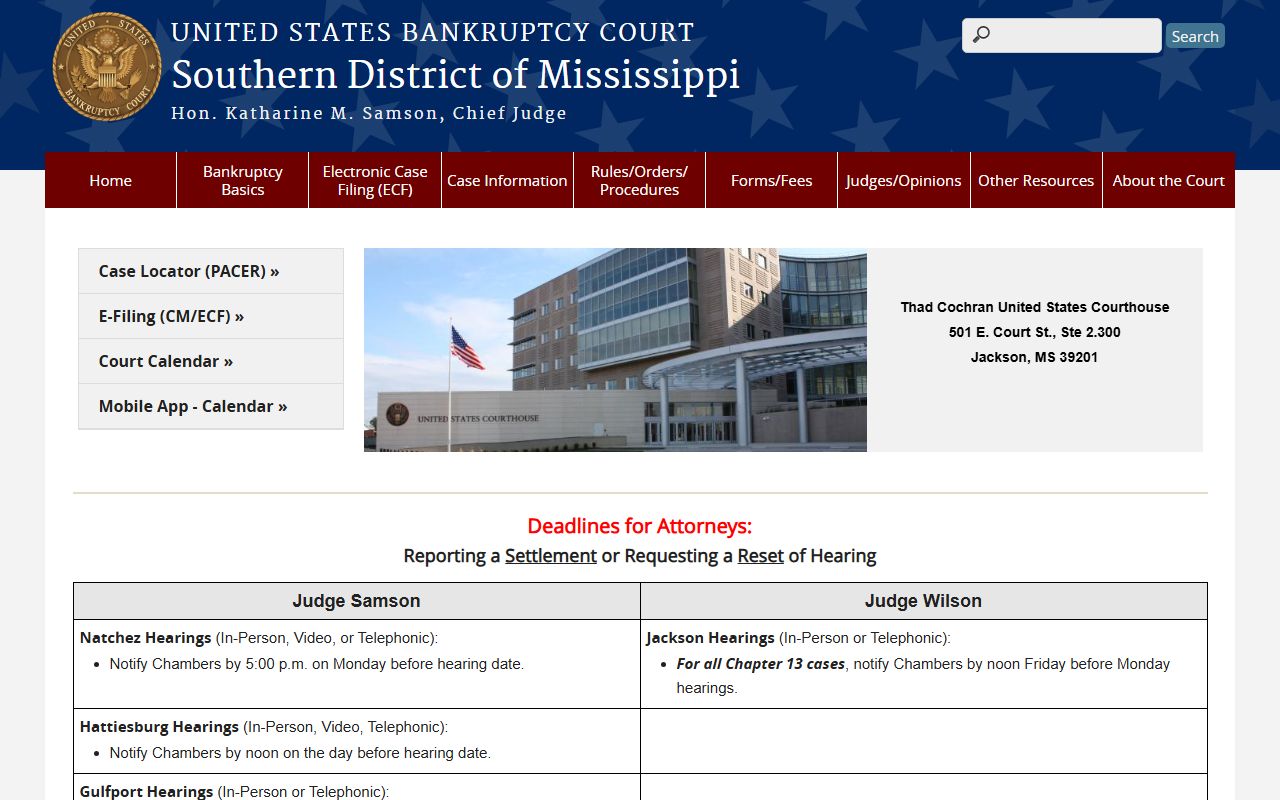
A bankruptcy estate gathers a debtor's assets and debts under a federal trustee, which is a different kind of estate from a deceased person's probate. It is included only so researchers do not confuse the two. A second cross-jurisdiction reference is the state corrections system, which lists facilities rather than estates.
The Mississippi Department of Corrections publishes a statewide facilities listing, including the regional jail that serves the county. It has nothing to do with probate, but it appears here as a cross-jurisdiction reference for record seekers who land on the wrong system. You can view it on the MDOC facilities page.
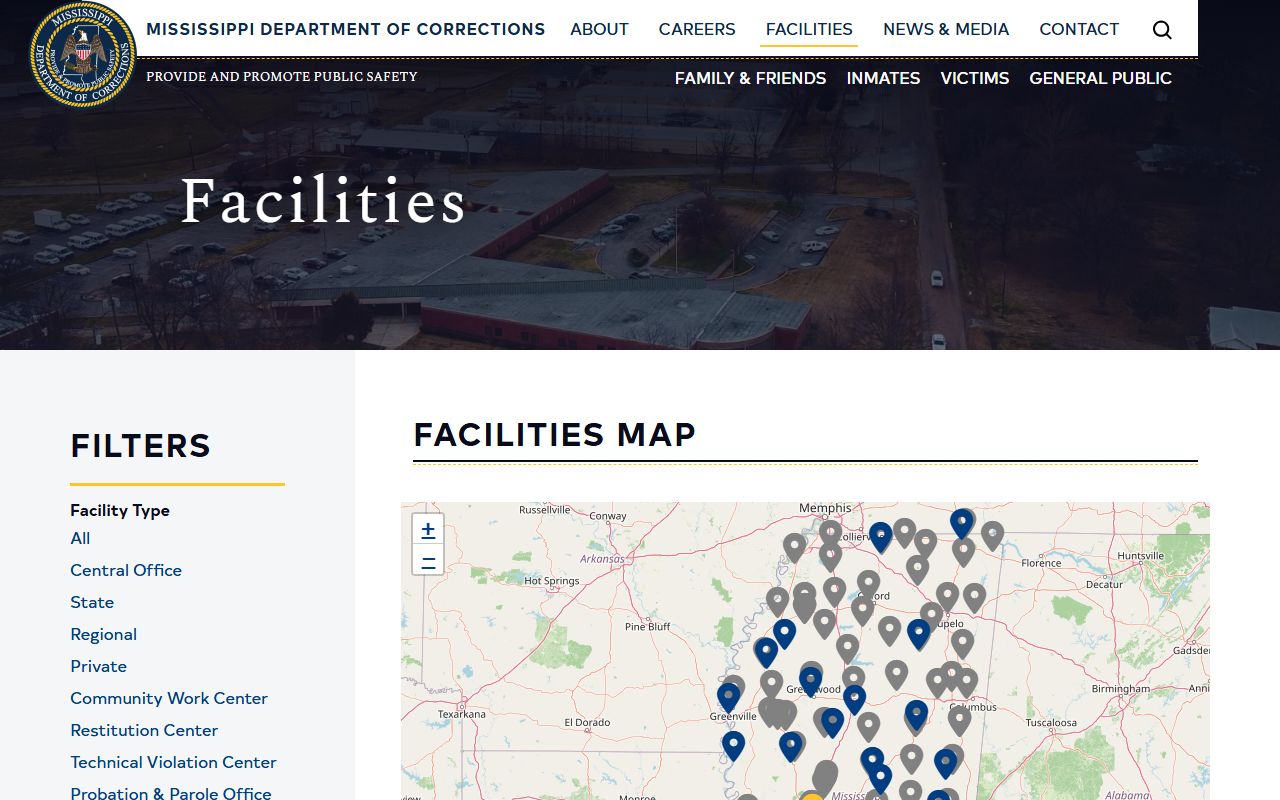
That listing is a corrections directory, not a court or estate record. For an actual Jefferson County probate file, the Chancery Clerk in Fayette remains the office to call.