
Criminal Court Records in Jefferson County
A criminal court record is the case file a court clerk opens once charges are filed against a person. It is not the arrest alone. The file gathers every paper the court touches: the charging document, bond papers, motions, hearing notices, plea entries, orders, the verdict or plea, and the sentence. In Jefferson County, the Circuit Clerk serves as Clerk of the Circuit Court and keeps the felony case papers, indictments, judgments, and executions. The clerk receives and files all indictments, motions, and related filings in criminal cases heard in Circuit Court. That office is the primary counter for a completed felony file.
Criminal matters move through more than one court level here. Justice Court handles the front end of a felony, where the affidavit is filed and the first appearance is held. Justice Court also hears misdemeanors, DUI charges, and county ordinance cases on its own. Felony cases then move to Circuit Court, the general trial court led by Hon. Tomika Irving, which holds the indictment and the full case file. Youth Court handles juvenile matters, which are not ordinary public records. A complete look at every record type sits within the broader Jefferson County court records system, while the charges themselves get closer treatment on the arrest and charge page.
How to Search Jefferson County Criminal Court Records
Jefferson County does not publish its own public case-search website. The practical route is a channel chain. Start with the court level that holds the file, use the statewide electronic system where the case has been filed there, then call or visit the clerk for older, sealed, or non-digitized records. Mississippi Electronic Courts is the statewide case-management and e-filing system for Chancery, Circuit, and County Courts. Public viewers reach filed documents through Public Access Mississippi Electronic Courts, known as PAMEC, after they register for a viewer account.
- Identify the court. Felony case files and indictments sit with the Circuit Clerk; first-appearance and affidavit records sit with Justice Court.
- Register at PAMEC for remote viewing of electronic Circuit Court filings, then sign in with your viewer credentials.
- Search by defendant name or case number, then narrow by court and filing date to find the matter.
- Open the case to read the docket, the charges, and the disposition. Restricted documents may not display.
- Request a certified copy from the Circuit Clerk when you need an official record for court or other formal use.
Some criminal data also rolls up to state systems. The Mississippi Department of Corrections inmate search shows people in state or regional custody, and Mississippi VINE sends custody and case alerts. Neither is the court file. If a record does not appear online, it may be on paper, sealed, or held at the courthouse counter.
Local Agencies Behind a Jefferson County Criminal Case
Several offices build the record before and during a criminal case. The Jefferson County Sheriff's Office is the chief law enforcement agency and handles arrests, criminal investigation, and civil process. Sheriff James E. Bailey Sr. leads that office at 601-786-3403. A felony case then passes through prosecutors. The County Prosecuting Attorney, Ikeecia Colenberg, represents the state in felony matters before Justice Court and in criminal cases appealed up to Circuit Court, and can present matters to the grand jury. The 22nd District Attorney, Daniella Shorter, is the felony prosecutor for Circuit Court cases after indictment or transfer.
A look at how local enforcement feeds the court file helps readers place a record in context. The Jefferson County Sheriff page describes patrol, investigation, and custody duties for the county.
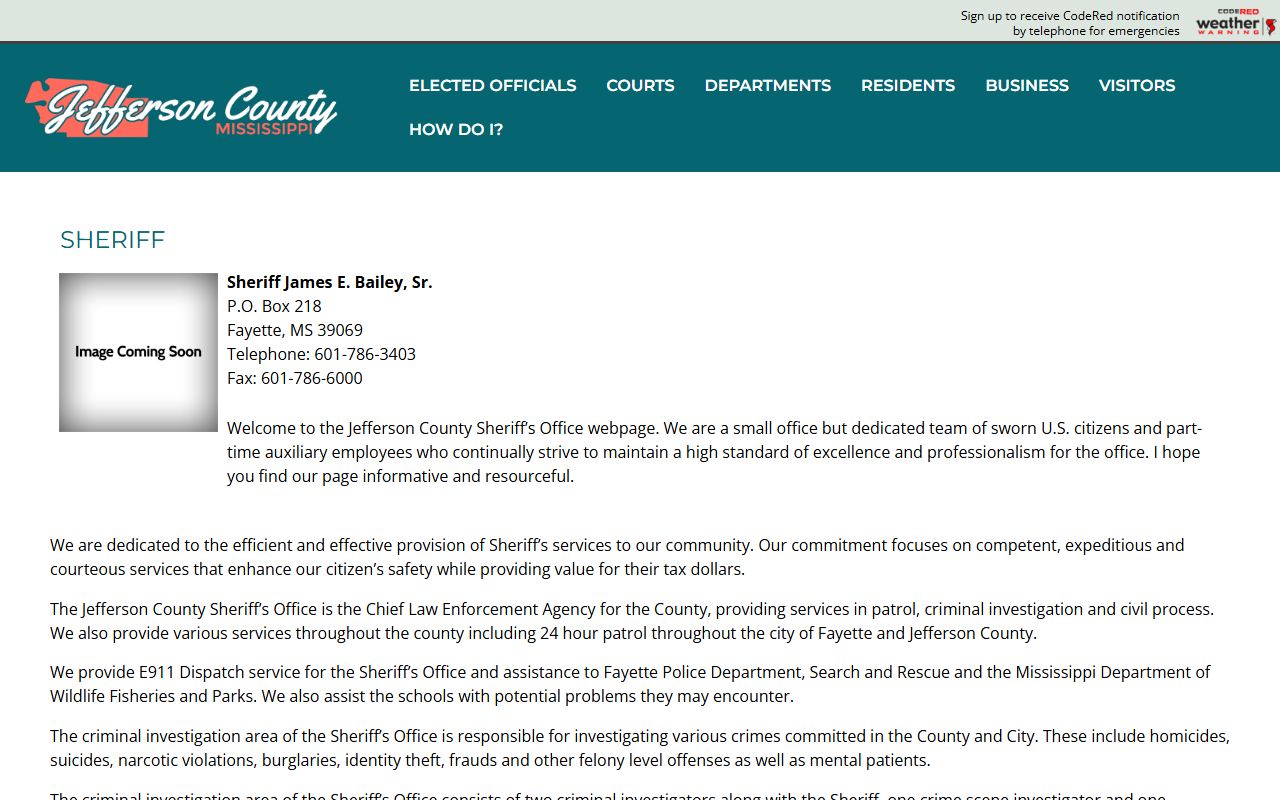
That same office runs the jail side of a case, while the court clerks keep the paper file. Federal crimes follow a separate track. Jefferson County sits in the U.S. District Court for the Southern District of Mississippi, Western Division, with the U.S. Attorney prosecuting federal charges. A look at the federal prosecutor's role shows how a small share of cases leave the state system entirely. The U.S. Attorney for the Southern District of Mississippi handles those federal matters.
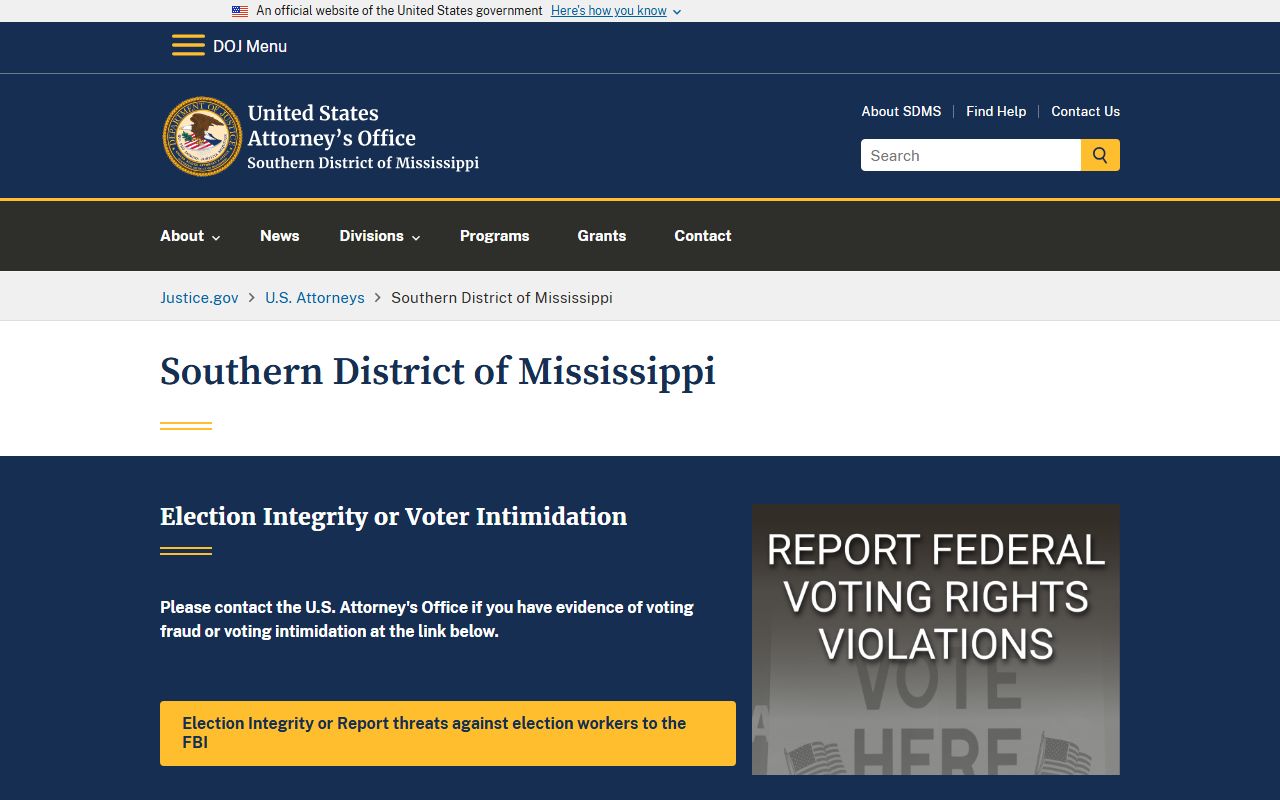
A federal case does not appear in the county Circuit Court file. It runs through the federal clerk and the PACER system instead. For nearly all local felonies, though, the Circuit Clerk in Fayette holds the case papers.
Stages of a Jefferson County Criminal Case
A criminal case moves through set stages, and each one leaves a mark in the record. In Jefferson County, all felony cases first go to Justice Court for the initial appearance and the filing of the affidavit. The county states that Justice Court judges hold sessions at the jail three times each week so a person gets an initial appearance within three days of arrest. After that front-end step, a felony heads toward the grand jury and an indictment, then to Circuit Court for the rest of the case. Misdemeanors can finish in Justice Court without ever moving up.
Case flow: Charges Filed / Affidavit › Initial Appearance (Justice Court) › Indictment › Pretrial / Motions › Plea or Trial (Circuit Court) › Disposition › Sentencing
| Stage | What Happens |
|---|---|
| Initial Appearance | Justice Court advises the person of the charge and sets bond, often at a jail session held three times a week. |
| Indictment | A grand jury reviews the case and returns a formal felony charge that moves the matter to Circuit Court. |
| Pretrial / Motions | Lawyers file motions, exchange evidence, and argue issues before the judge sets the case for plea or trial. |
| Plea or Trial | The defendant enters a plea, or a jury or judge weighs the proof and reaches a verdict in Circuit Court. |
| Sentencing | After a guilty plea or verdict, the judge imposes the sentence, which the clerk records in the file. |
Each stage adds filings. The affidavit and bond papers come first. The indictment, plea, and any motions follow. The judgment and sentence close the file. A reader who knows the order can spot gaps and find the part of the record they need.
What a Jefferson County Criminal Court Record Shows
A criminal case file holds many fields. Some name the people involved, some track the charges, and some show money or outcomes. The list below reflects the kinds of entries Mississippi court records carry, from the case number through the sentence. Exact case-number formats are not published in open county pages, so a name search or a number from the clerk or citation is the usual starting point.
| Field | What It Shows |
|---|---|
| Case Number | The unique identifier the clerk assigns to the case for filing and lookup. |
| Defendant | The person charged. In a criminal case the parties are the state and the defendant. |
| Charges | The offenses filed, listed by statute, with the level marked as felony or misdemeanor. |
| Plea | The defendant's formal answer, such as guilty or not guilty, entered on the record. |
| Docket Entries | The dated list of filings, hearings, continuances, and orders as the case moves. |
| Disposition | The final outcome of each charge, such as conviction, dismissal, or acquittal. |
| Sentence | The punishment imposed after a conviction, which may include jail, fines, or restitution. |
The file also lists the judge, the prosecutor, and any costs. Bond amounts, fines, and criminal court costs appear in the financial entries. Criminal court costs vary by charge and bond, so the clerk computes them per case rather than from a flat fee. Sensitive identifiers such as Social Security numbers, dates of birth, and home addresses are meant to be redacted from public filings under court rules.
Charges vs. Convictions
Being charged is not the same as being convicted. A criminal court record can show charges that were dropped, dismissed, or that ended in acquittal. A charge is only an accusation. It rests on probable cause, the lower standard police and prosecutors use to bring a case. A conviction comes later, and only after proof beyond a reasonable doubt through a guilty plea or a verdict. Both the charge and the outcome stay in the public file, so reading the disposition matters as much as reading the charge.
| Charge | Conviction | |
|---|---|---|
| Stage | Accusation | Verdict or plea |
| Burden of Proof | Probable cause | Beyond reasonable doubt |
| Public Record | Yes | Yes |
For a closer look at how a charge gets filed, amended, or dropped before it reaches this stage, the arrest records and court charges page traces the path from arrest forward. The criminal case file picks up the story once the court takes the matter and runs it to a final result.
Reading Dispositions and Sentences
The disposition is the final outcome of a charge. Common entries include guilty, not guilty, dismissed, and nolle prosequi, which means the prosecutor chose not to pursue the charge. A plea of nolo contendere, or no contest, accepts the punishment without admitting guilt. Some cases end in a deferred or nonadjudicated outcome, where the court holds judgment while the person completes conditions. Reading the disposition line tells you what really happened to each count.
The sentence follows a conviction. It may set a term in jail or prison, a fine, restitution to a victim, probation, or a mix of these. The record notes the length, any suspended portion, and conditions the person must meet. A single case can carry several charges, each with its own disposition and sentence, so the file should be read count by count rather than as one verdict.
Sealed vs. Expunged Records
Some criminal records leave public view. A sealed record is closed from public access by law or court order but still exists. An expunged record goes further and is removed or restricted so it is treated, for most purposes, as if it never happened. Mississippi allows expungement of qualifying arrests, dismissals, misdemeanors, and a limited set of felonies when statutory criteria are met. The Circuit Clerk fee schedule lists a petition for expungement and asks filers to contact the clerk for the local fee and routing.
| Sealed | Expunged | |
|---|---|---|
| Visibility | Hidden from public | Destroyed / treated as never existed |
| Law Enforcement | Limited access | Very limited |
| Eligibility | Set by court order or statute | Qualifying cases under Miss. Code Ann. 99-19-71 |
An expungement request starts in the court that handled the conviction, arrest, or charge. The filer should gather the arrest date, agency, charge, case number, disposition, and any dismissal or completion order under Miss. Code Ann. 99-19-71. The petition is filed in the proper court, noticed as required, and ruled on by the judge. If granted, the order goes to each agency that holds the record. Even then, some copies may remain available for law-enforcement or licensing use.
Note: Expungement does not erase every private copy, and some records stay open to courts, licensing boards, and law enforcement under the statute and order terms.
Public Access to Jefferson County Criminal Court Records
Most adult criminal court records are open to the public in Mississippi. The state Public Records Act sets the baseline: records held by a public body are generally available for inspection unless a statute makes them exempt or confidential. Court files add their own access framework through Mississippi Electronic Courts, where filed documents can be viewed remotely by registered PAMEC users when not restricted, and where the courthouse counter remains the fallback. Copy and certification fees apply, and certified copies come only from the clerk who holds the record.
Key Statutes:
Miss. Code Ann. § 25-61-1 - The Mississippi Public Records Act makes public records open for inspection by any person unless a law exempts them.
Miss. Code Ann. § 99-19-71 - Sets which arrests and convictions qualify for expungement through a court petition.
Statewide e-filing reached all Mississippi trial courts in 2025, so the electronic path now covers Circuit Court matters across the state. The Mississippi Electronic Courts framework is the main remote route, while a phone call or visit to the Circuit Clerk still works for older or non-digitized files.
Background Check Considerations
People read criminal court records for many reasons, from checking a case status to vetting a tenant or worker. A casual lookup of a public case file is one thing. A formal background check used for credit, employment, housing, or insurance is another, and federal law sets rules for those reports. A compliant background check runs through a licensed consumer reporting agency that follows the Fair Credit Reporting Act, not through a casual records search.
Important: A public criminal court record is not a certified criminal-history report, and public case listings may not be used for credit, employment, tenant, or insurance decisions under the FCRA.
Restricted Criminal Court Records in Jefferson County
Not every criminal-related record is open. Youth Court cases involving delinquent, neglected, or abused children are handled apart from adult files and are not ordinary public records. Sealed and expunged cases drop out of public portals and clerk counters. Active investigations, sealed search warrants, and filings that carry private identifiers may also be withheld. When a file does not show, it may be restricted rather than missing.
The safest step is to ask the office that should hold the record. The Circuit Clerk can confirm whether a felony file is open, sealed, or simply on paper. Justice Court can speak to a first-appearance or misdemeanor record. A blank result in an online search is not proof a case never existed, since the record may be old, confidential, or held at a different court level.